
The examples below focus on key design decisions made to preserve intent under technical and production constraints.
All projects shown here were originally designed from scratch by us.
System-Based Differentiation for Blind-Box IP Production

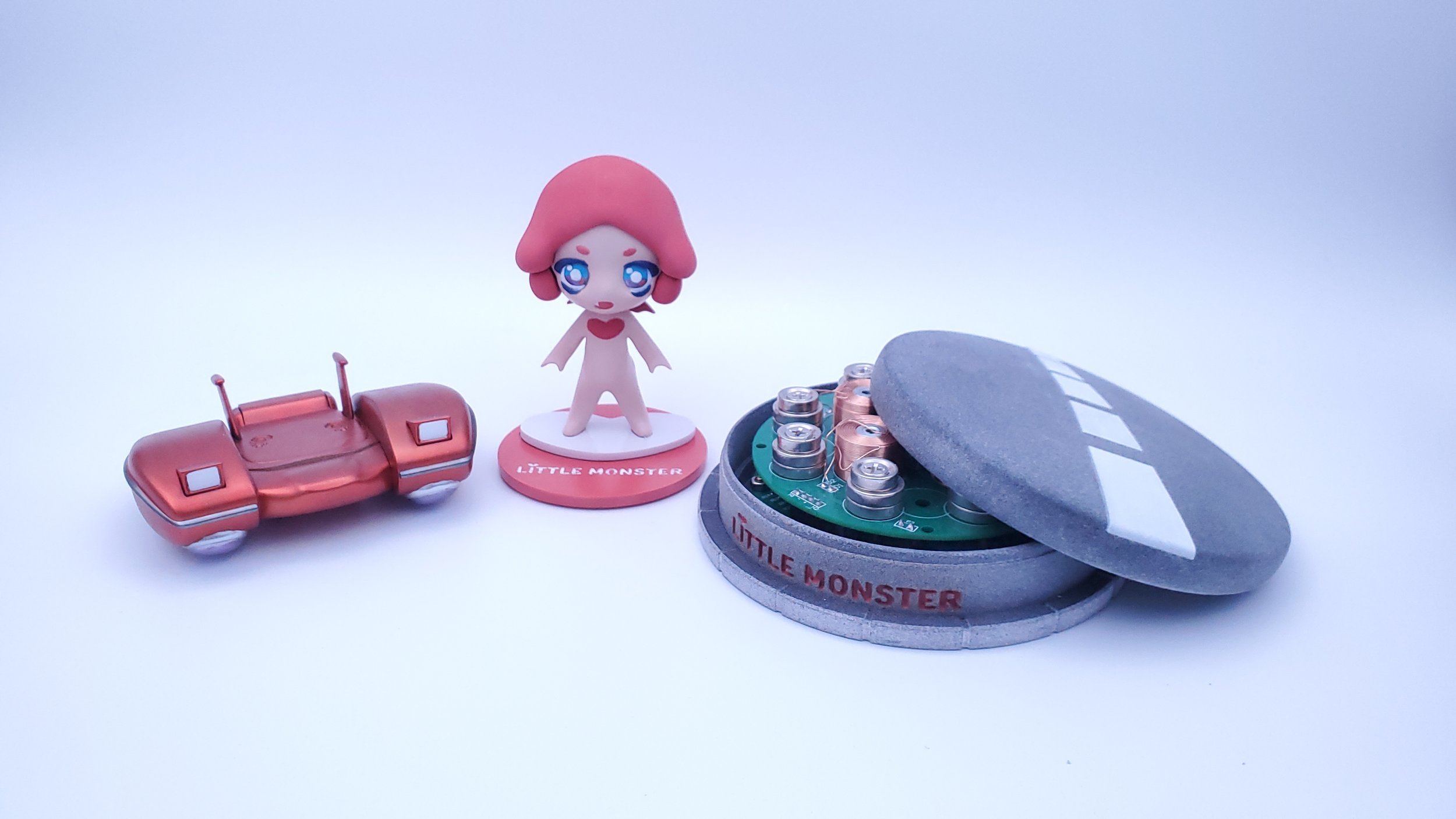
Constraint
Typical blind-box figures rely on a single static pose, which limits world-building and makes differentiation difficult.
At the same time, the design needed to remain structurally stable, cost-controlled, and suitable for mass production.
Context
Originally designed as an original IP character intended for blind-box collectible figures, with a goal to differentiate from standard blind-box products.
Decision
We designed the character together with modular accessories that extend the character’s narrative and world-building.
A key decision was integrating a hover-style flying board as part of the base system, allowing the character to appear floating above the platform while maintaining production stability.
Result
The final design achieved visual distinction beyond conventional blind-box figures, strengthened the IP’s storytelling potential, and remained manufacturable with stable structure and repeatable production results.
Cross-Media Validation for Tokusatsu-Scale Collectibles
Context
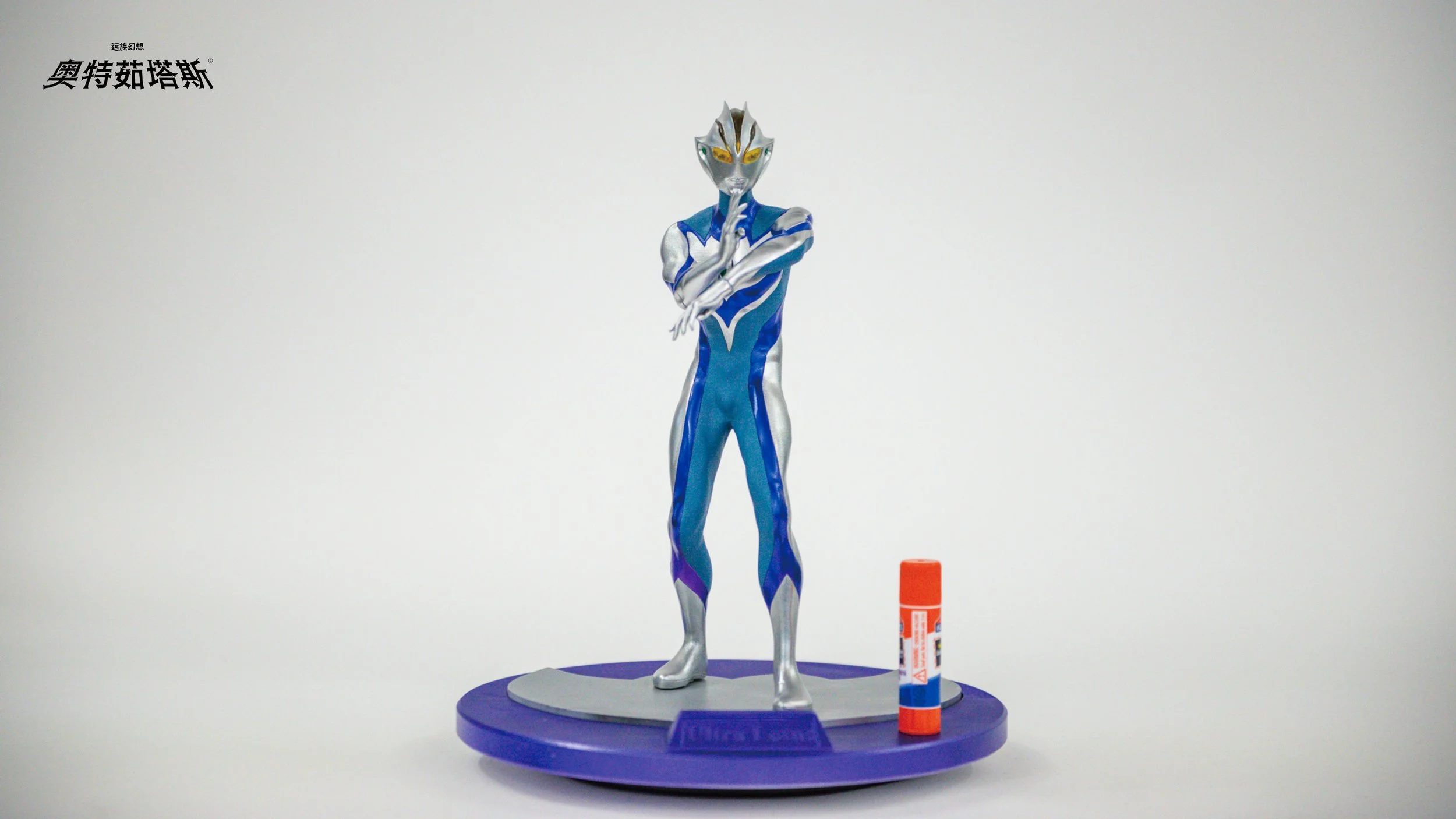
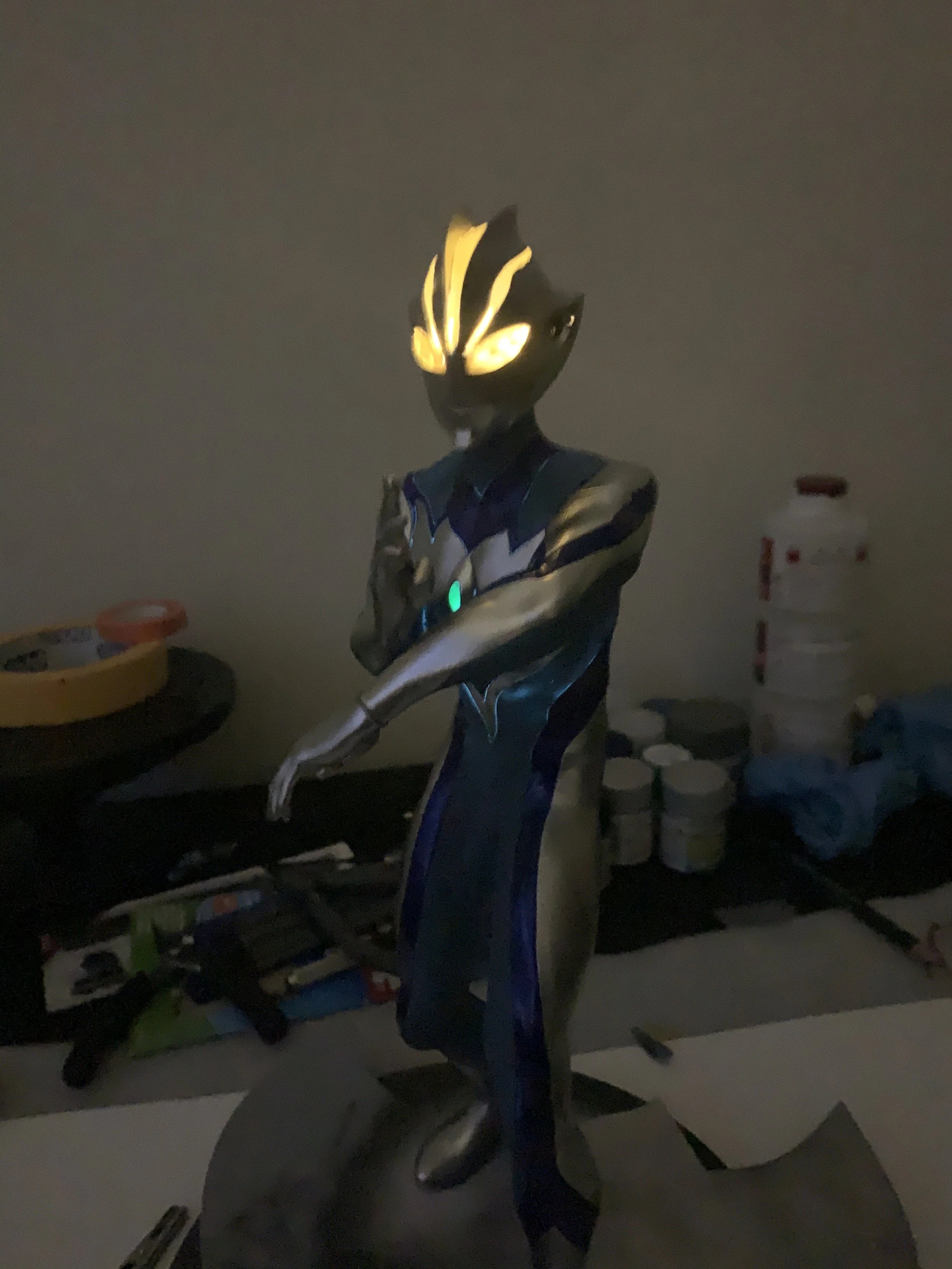
Originally designed as an original IP character within the same genre as Ultraman, intended to evoke a live-action tokusatsu aesthetic and be developed into a collectible figure.
Constraint
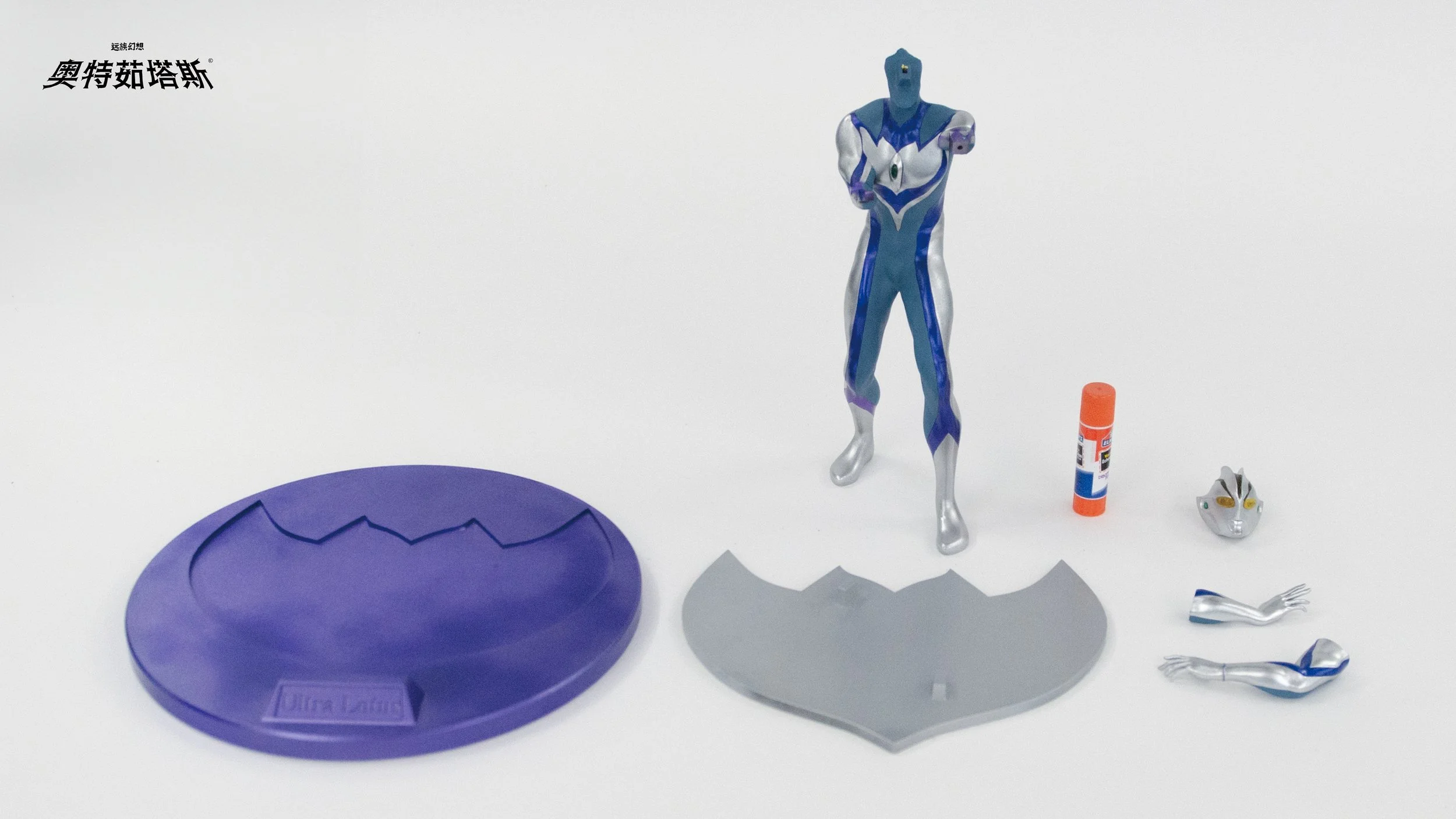
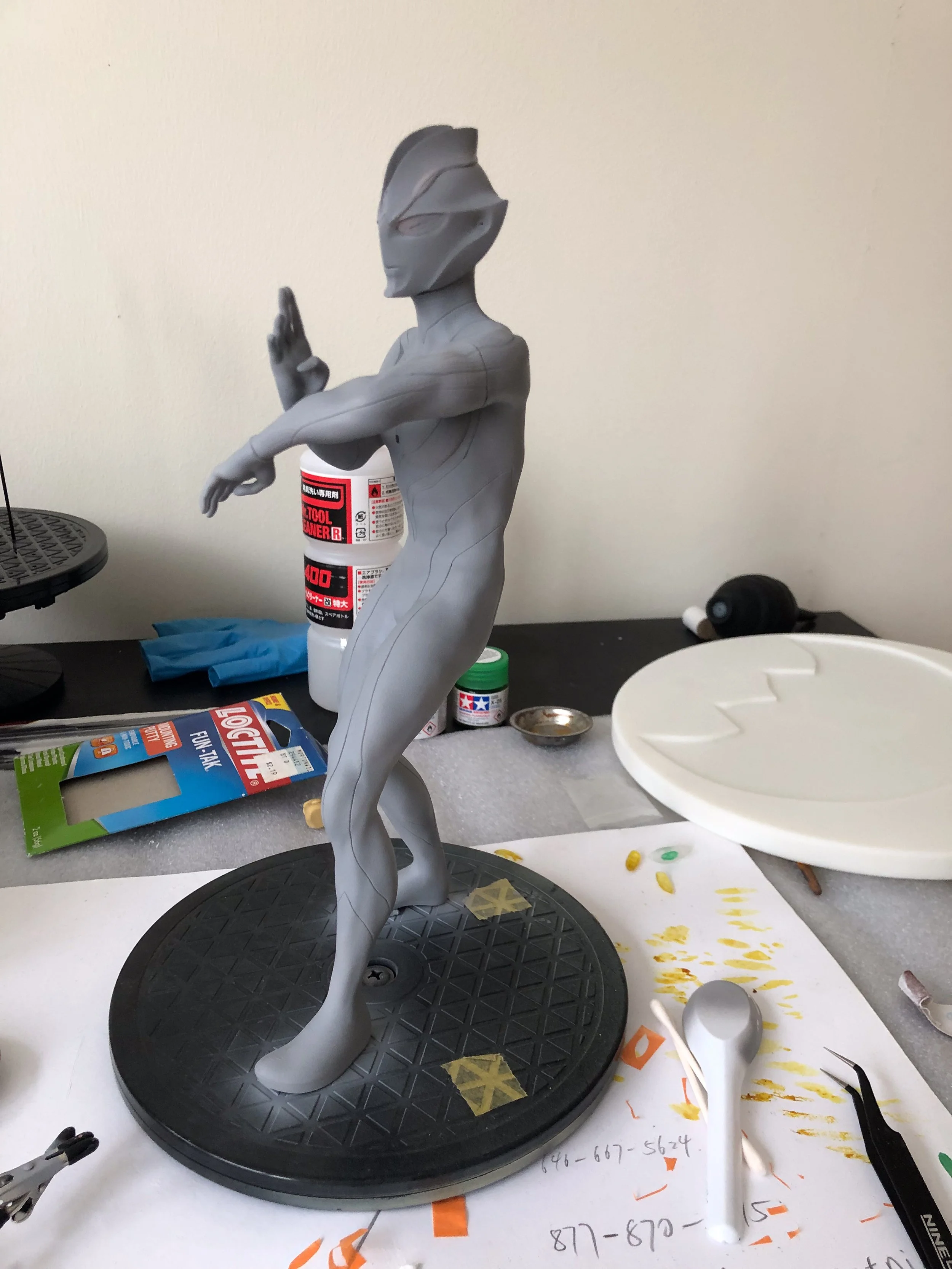
The character needed to preserve the visual language of large-scale tokusatsu heroes while supporting internal lighting effects and remaining suitable for high-resolution 3D printing and physical production at a 28 cm scale.
Decision
We validated the character through motion capture and Unreal Engine 5, allowing rapid, high-quality animation tests to confirm proportions, silhouette, and screen presence.
For the physical figure, we integrated magnet-controlled LED lighting inside the head and chest to reproduce the character’s illuminated features.
To ensure manufacturability and print accuracy, the body was structurally segmented into production-ready components.
Result
The final figure successfully translated the tokusatsu visual impact into a physical collectible, preserved lighting effects without compromising structure, and enabled stable high-detail production through modular, print-ready components.
Design Identity Within Hardware Constraints

Context
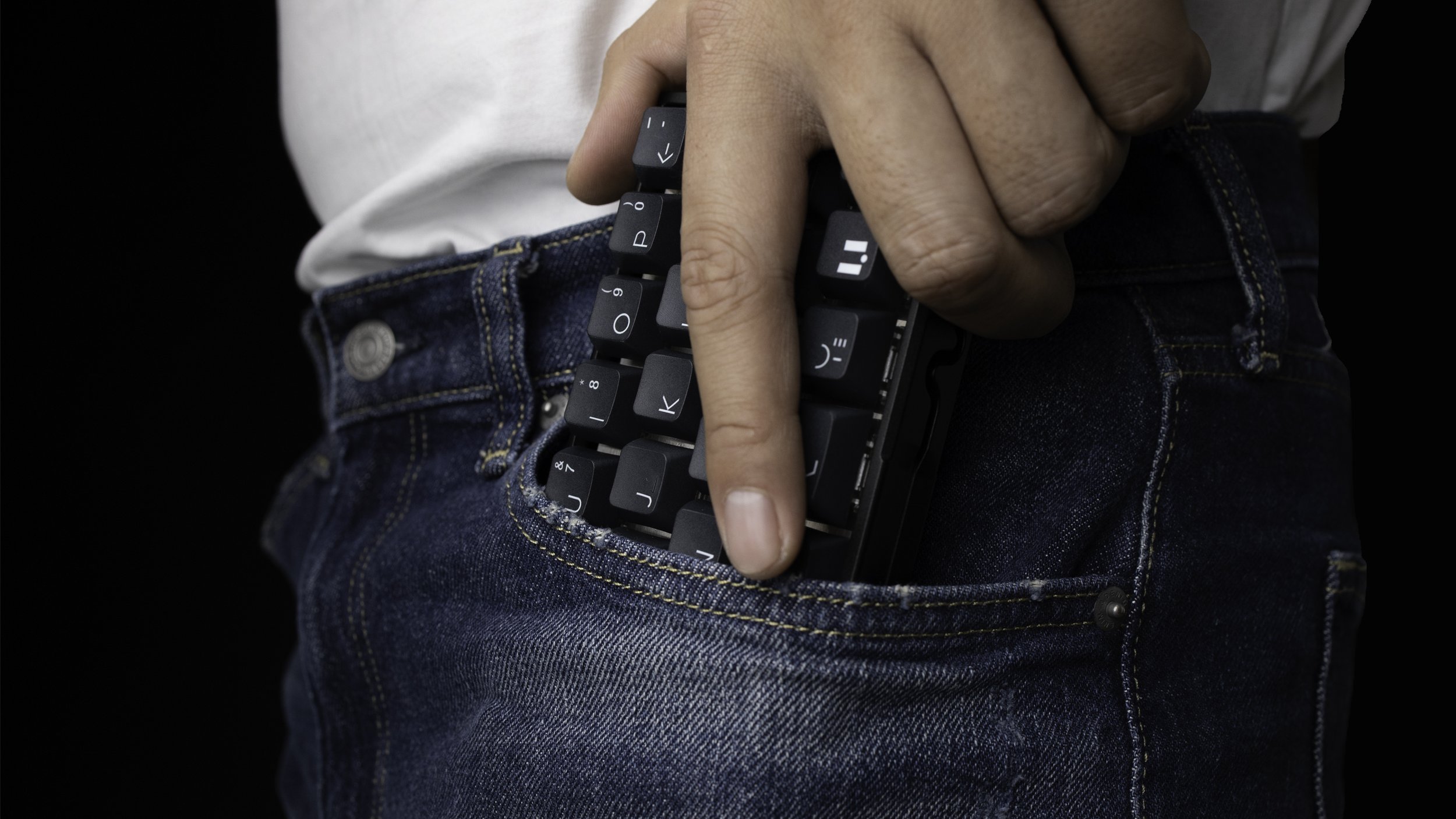
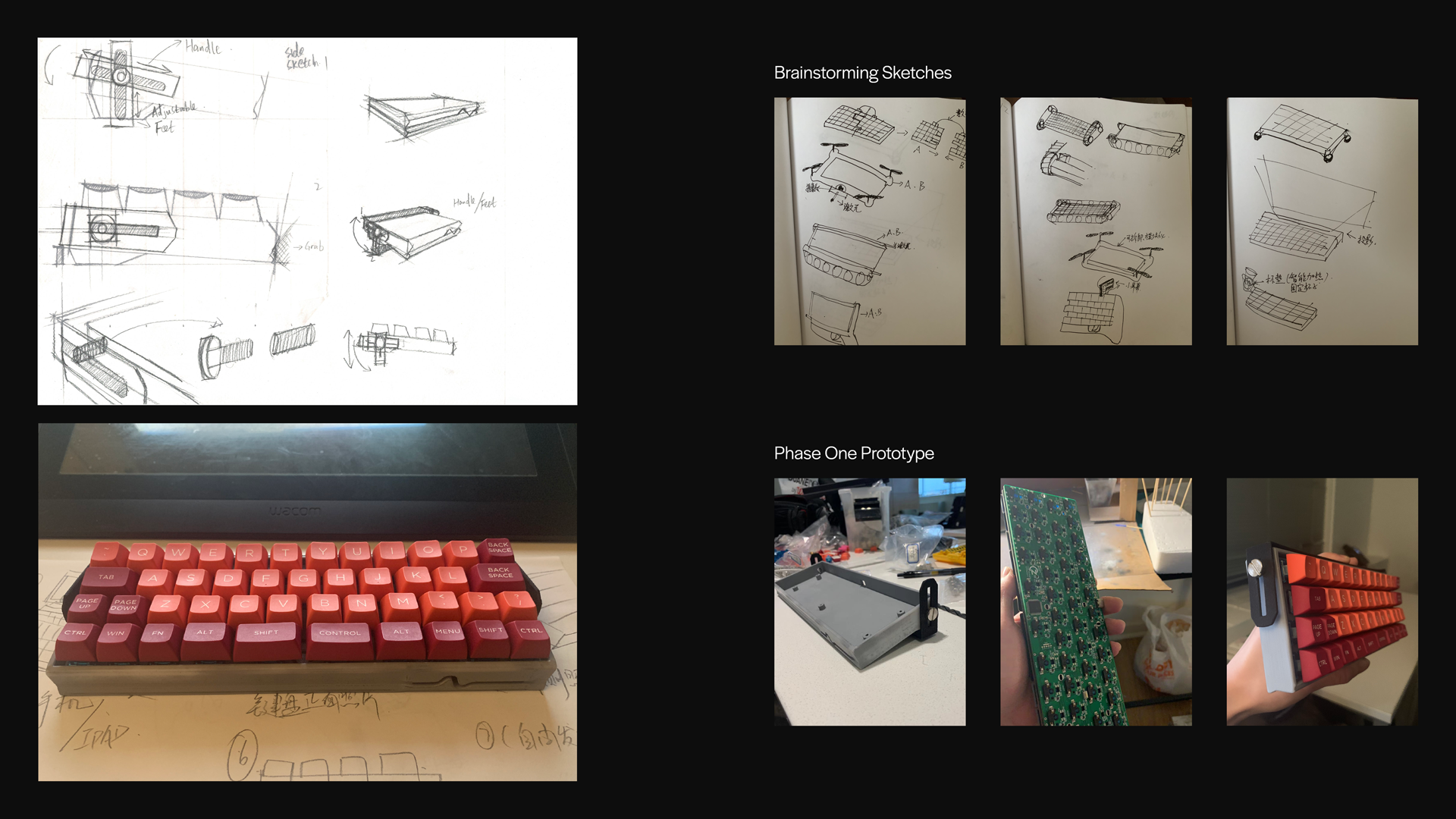
We were commissioned to design a keyboard that delivers professional typing performance while remaining highly portable and customizable.
Decision
We selected a 40% keyboard layout to balance portability with functional efficiency, and designed a custom PCB to support hot-swappable mechanical switches.
To preserve design identity beyond hardware, we created a custom typeface specifically for the keycaps.
Additionally, programmable LED lighting was integrated directly on the PCB, enabling user-level customization without compromising structural clarity.
Constraint
Achieving high-quality tactile feedback typically requires larger layouts, while portability and customization introduce limitations in size, component layout, and power management.
Result
The final design delivered a compact, professional-grade typing experience, combined modular customization with a distinct visual identity, and remained production-ready through a clear, scalable hardware architecture.
Ergonomic Re-Architecture for AR/VR Productivity Wearables


Constraint
Integrating AR and VR functionality requires accommodating substantial hardware, which conflicts with the physical and ergonomic limitations of a glasses-like form factor.
The design needed to support long-term use without causing excessive pressure or fatigue while maintaining a wearable identity rather than becoming a head-mounted device.
Context
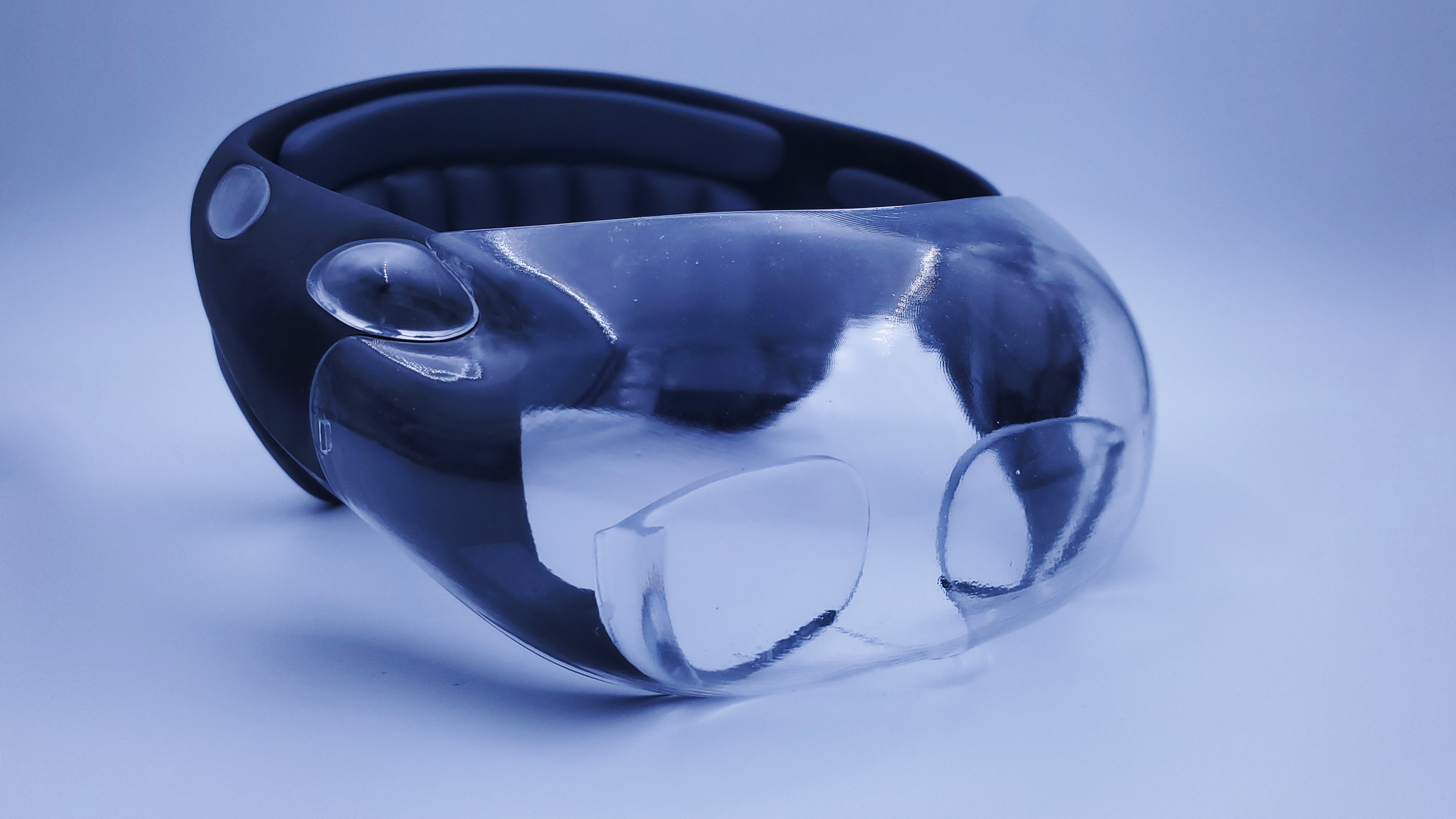
We were tasked with designing a wearable device that combines both AR and VR capabilities into a single pair of glasses intended to function as a true productivity tool.
Decision
We collaborated closely with the industrial design team to redefine what “glasses” could mean in this context.
The external form was developed around a cloud-inspired design language, while the mechanical structure shifted primary load support toward the back of the neck.
By using ergonomic principles to redistribute weight away from the face and head, the design reduced perceived load and improved comfort during extended use.
Result
The final design successfully accommodated complex AR/VR hardware within a redefined eyewear form, reduced user fatigue through ergonomic weight distribution, and established a wearable structure suitable for sustained, productivity-focused use.
If you’re at this stage:
Developing Prototype
Preparing for sampling
Already revising a failed sample
Unsure whether to move to mass production